
Author and Poet My poetry, short stories, articles, and novels are imaginative views of the world, nature and life through my eyes.
Saturday, March 9, 2013
There are so many women that have for different reasons inspire me and continue to do so. Some of them have passed from this life and some are still with us. Because of this I decided I would write about what inspires me in women, instead of about a woman. Though, I may name some of those women of whom I am speaking.
Courage is a something that inspires me every day. Sometimes it is the unseen courage of the struggling mother, who is working, coming home, making beds, cooking, sitting with her child over their homework, and otherwise nurturing that child enabling it to grow to be the best it can be.
Sometimes, it is a different kind of courage; instead the woman may be quietly fighting cancer, Crohns disease, PTSD, or some other life threatening or life debilitating disease.
At times, they suffer cruel questions by unknowing people. Words that diminish there illness or if it is an unseen disease scoffed at by those who do not understand or do not know because it isn't something that she talks about. In both cases, the woman I have known do these things cheerfully or with kindness and thoughtfulness of others. Both my mother and my sister, as well as many of those friends I hold highly have or are going through one or more of these things.
I admire and am inspired by the woman who has the pluck to fight the good fight even when the odds are stacked against them. Women like Hillary Clinton, Eleanor Roosevelt, and Golda Meir who put up for years with so many calling them names, yet continued their crusade to right wrongs and fight for the rights of women, minorities, and the working person. Later as in Hillary’s case running for President and nearly winning. Golda Meir became Prime Minister of Israel. They both lived admirable lives and in Hillary’s case she continues to do so with grace.
The woman who gives her life’s blood to become a caretaker for her disabled or elderly parent or child and does so with love, heart, and compassion. Even in the darkest moments of her soul rarely does she even mention her plight and when she does it is to say, she is tired. Not the truth that she is endanger of losing herself within her role. I know many of these women and only because they have come to trust me do I even know what efforts they put in daily.
The woman who gives kindness and thoughtfulness even when she is depleted and in need of it herself is someone I admire. That is the woman who is always looking at things from the other person’s point of view or understanding that she may not know all of the story. She is the woman who says to herself, I may have misheard or misunderstood, there is another side besides mine.
I admire my neighbor, who waited and still loved her ex-husband after a forty year separation. She let go of her own hurts and cherished what was good, moving on to get her master’s degree at sixty-five and at eighty-two they remarried. She is now at eighty-seven quietly fighting lung cancer, macular degeneration, and a variety of other issues, yet remains a cheerful friend always there to give a strong word of encouragement or a kind gesture.
And last, but not least I admire and am inspired by women who choose to fight for women’s rights and reach out their hands for the other knowing that we do not need to be at odds with each other, but can become more together than apart.
So many of you here on The Verge, inspire me daily with your courage, wisdom, ability to go the extra mile and kindness to others. I thank you for your inspiration.

Wednesday, February 27, 2013
 I have long admired Maria Savva, for both her writing and her willingness to support other authors. I have witnessed her on many occasions give her time and knowledge with kindness and generosity. I am honored and excited that she agreed to let me interview her on my blog today.
I am thrilled to welcome her to my blog today.
I loved both of your novels, Haunted and Coincidences and I am looking forward to reading more of your work. Would you tell us whether your books are inspired by real events or real people?
I would go as far as to say that all of my short stories and novels are inspired by real events and real people. Of course, I don’t just write someone’s life into my stories, but I have a mixing pot of lots of things I have heard and lots of things I have seen. Many of the events in my novels and stories are things that have in some way actually happened to me. Other events are things that I've heard maybe on the news, or from listening in to a random stranger’s conversation as I walk past them in the street. That sort of thing. For example, when I create characters, their personalities might be inspired by someone I know, or someone I knew briefly in the past. None of my characters have ever been solely based on one person, but have been a mix of different people. I like to think I am a collector of stories from our lifetime, and I fictionalize them and document them for future generations to read. That’s a fiction writer’s job.
I have long admired Maria Savva, for both her writing and her willingness to support other authors. I have witnessed her on many occasions give her time and knowledge with kindness and generosity. I am honored and excited that she agreed to let me interview her on my blog today.
I am thrilled to welcome her to my blog today.
I loved both of your novels, Haunted and Coincidences and I am looking forward to reading more of your work. Would you tell us whether your books are inspired by real events or real people?
I would go as far as to say that all of my short stories and novels are inspired by real events and real people. Of course, I don’t just write someone’s life into my stories, but I have a mixing pot of lots of things I have heard and lots of things I have seen. Many of the events in my novels and stories are things that have in some way actually happened to me. Other events are things that I've heard maybe on the news, or from listening in to a random stranger’s conversation as I walk past them in the street. That sort of thing. For example, when I create characters, their personalities might be inspired by someone I know, or someone I knew briefly in the past. None of my characters have ever been solely based on one person, but have been a mix of different people. I like to think I am a collector of stories from our lifetime, and I fictionalize them and document them for future generations to read. That’s a fiction writer’s job.
 There are similarities in Coincidences and Haunted, in that they both deal with emotions and secrets, yet are very different novels. Would you tell us what you wanted the differences to be between the two and whether you believe you accomplished this?
I don’t think about things like that when I write. I wrote Coincidences in 1997, and was not thinking about that book at all when I wrote Haunted. I don’t ever plan to make my next book different to the last or similar to the last, but I have noticed similar themes running through all my work, even though they are different genres. When I've written a book, I leave it behind me and move on to the next project. I write about things that inspire me to write. Inspiration comes in many forms, and different things that happen in my life will inspire me to write something. So, for example, Haunted was mainly inspired by a news story I heard in about 2004, and a road rage incident I witnessed in early 2011. Those things sparked my imagination and I had to write the book.
I read in one of your interviews that if you were trapped in an elevator you wouldn't like it to be with someone who didn't like your books. Would you mind telling us why?
I suppose because if someone doesn't like my books they probably wouldn't like me much either. There’s a whole lot of me that goes into my books. My philosophy about life, my values, dreams, etc. So being stuck in an elevator with someone who I didn't have anything in common with would not be nice. Also, it would give me less to talk about... I do like to talk about my books LOL.
How did it feel to have Coincidences land on the top 10 list of Susan Buchanan’s blog Sooz’s Top 10 Books of 2012?
That was wonderful. Especially because I really enjoyed both of Susan’s books. She’s a talented writer, so for someone like that to choose my book in her top 10, that means a lot. She reads loads of books, too, so it’s even more amazing she chose mine. I’m very grateful and thankful.
You grew up reading at a remarkably young age. What would you say was the most notable thing that kept you on your path to learning to read?
I was very young when I started reading, maybe about three. I think it’s because I had an older brother who was already at school and he was learning to read, and I am obsessed with the written word, so I probably wanted to read too. Or probably just wanted to do whatever he was doing. I’m sure curiosity played a big part in my learning to read so young. We used to live in one of those old houses that had three floors, and each room was occupied by a different family. That’s quite typical of rental accommodation in the UK in the ‘70s. There was an old woman who lived upstairs. She didn't have a family of her own, and used to look after me and my brother sometimes. I’m told she used to teach us things, so maybe she had a hand in teaching me to read so young.
I understand that you thought a bit of the reason you didn't feel like you fit into the life of a working lawyer was your love of human nature. Do you still believe that was a large factor?
I was actually quite successful as a lawyer, and enjoyed my job for the most part. I was made redundant in 2008 in the big housing crash, and as I was specializing in conveyancing it has been hard to get back into work as a lawyer. I would probably do that again though if the opportunity arose. I think what I might have said in the past was that I didn't like the way some of the lawyers I came into contact with behaved. In my novel, Second Chances, two of the characters are partners of a law firm, and they basically reflect the type of people that I didn't like working with. I am the sort of person who won’t step on someone else just to climb the ladder, but unfortunately, there are many people out there who will, and maybe what I have alluded to in interviews in the past is that due to my nature, maybe I didn't fit in that kind of dog-eat-dog environment.
There are similarities in Coincidences and Haunted, in that they both deal with emotions and secrets, yet are very different novels. Would you tell us what you wanted the differences to be between the two and whether you believe you accomplished this?
I don’t think about things like that when I write. I wrote Coincidences in 1997, and was not thinking about that book at all when I wrote Haunted. I don’t ever plan to make my next book different to the last or similar to the last, but I have noticed similar themes running through all my work, even though they are different genres. When I've written a book, I leave it behind me and move on to the next project. I write about things that inspire me to write. Inspiration comes in many forms, and different things that happen in my life will inspire me to write something. So, for example, Haunted was mainly inspired by a news story I heard in about 2004, and a road rage incident I witnessed in early 2011. Those things sparked my imagination and I had to write the book.
I read in one of your interviews that if you were trapped in an elevator you wouldn't like it to be with someone who didn't like your books. Would you mind telling us why?
I suppose because if someone doesn't like my books they probably wouldn't like me much either. There’s a whole lot of me that goes into my books. My philosophy about life, my values, dreams, etc. So being stuck in an elevator with someone who I didn't have anything in common with would not be nice. Also, it would give me less to talk about... I do like to talk about my books LOL.
How did it feel to have Coincidences land on the top 10 list of Susan Buchanan’s blog Sooz’s Top 10 Books of 2012?
That was wonderful. Especially because I really enjoyed both of Susan’s books. She’s a talented writer, so for someone like that to choose my book in her top 10, that means a lot. She reads loads of books, too, so it’s even more amazing she chose mine. I’m very grateful and thankful.
You grew up reading at a remarkably young age. What would you say was the most notable thing that kept you on your path to learning to read?
I was very young when I started reading, maybe about three. I think it’s because I had an older brother who was already at school and he was learning to read, and I am obsessed with the written word, so I probably wanted to read too. Or probably just wanted to do whatever he was doing. I’m sure curiosity played a big part in my learning to read so young. We used to live in one of those old houses that had three floors, and each room was occupied by a different family. That’s quite typical of rental accommodation in the UK in the ‘70s. There was an old woman who lived upstairs. She didn't have a family of her own, and used to look after me and my brother sometimes. I’m told she used to teach us things, so maybe she had a hand in teaching me to read so young.
I understand that you thought a bit of the reason you didn't feel like you fit into the life of a working lawyer was your love of human nature. Do you still believe that was a large factor?
I was actually quite successful as a lawyer, and enjoyed my job for the most part. I was made redundant in 2008 in the big housing crash, and as I was specializing in conveyancing it has been hard to get back into work as a lawyer. I would probably do that again though if the opportunity arose. I think what I might have said in the past was that I didn't like the way some of the lawyers I came into contact with behaved. In my novel, Second Chances, two of the characters are partners of a law firm, and they basically reflect the type of people that I didn't like working with. I am the sort of person who won’t step on someone else just to climb the ladder, but unfortunately, there are many people out there who will, and maybe what I have alluded to in interviews in the past is that due to my nature, maybe I didn't fit in that kind of dog-eat-dog environment.
 Which part of human nature do you find to be the most fascinating?
All of it. I've always been interested in human psychology. I used to watch all the daytime shows when I was younger, you know, Oprah, Ricki Lake, that type of thing. I have always been an observer of people. I was very shy when growing up and still can be in some situations, so I was always quiet, and listened more than I spoke. It’s amazing how much you can learn about people by just observing them. Most of my novels and stories are almost written so that I can try to find a reason why people would behave in a certain way. I’m fascinated by why people do things; why they lie, why they keep secrets, why they behave in a certain way, etc. I explore a lot of that kind of thing in my novels.
It seems today that we all need to have an online presence. Do you have one that you prefer or find the most effective?
I’m mainly on Bestsellerbound, Twitter, Goodreads, and Facebook. I’m not of the generation that grew up with computers, and in general, I would prefer not to be online so much, but as you say, it seems we have to have an online presence these days. I try to use those sites as a way to connect with people, especially authors and readers, as more of a support network for my writing really. It can get lonely being a writer, especially when you’re working on a project like a novel, so sometimes it’s fun to be able to chat with people online as a distraction. My favorite site is BestsellerBound.com because I have met some very supportive authors there, and people that I feel I can call my friends, even though I've never met most of them.
I find that each time I believe I am getting a handle on social networking a new site pops up. Do you ever find yourself overwhelmed with it all?
Constantly. I try to limit myself to a few sites, as mentioned in the last question. I have accounts with other sites, but rarely use them.
If one of your books were chosen to be made into a movie, which would you like it to be and why?
Only one? I want them all to be made into movies. It’s a childhood dream of mine. But if you twisted my arm and I had to choose, I would choose Haunted. I was asked this question recently for The Next Big Thing blog, and I mentioned that I would like Robin Williams to play Nigel (he’s such a versatile actor), and Kate Winslet to play Emily. That would be such a great film. It’s very dark, very chilling, and would be perfect for the big screen. Of course, I may be biased.
Which part of human nature do you find to be the most fascinating?
All of it. I've always been interested in human psychology. I used to watch all the daytime shows when I was younger, you know, Oprah, Ricki Lake, that type of thing. I have always been an observer of people. I was very shy when growing up and still can be in some situations, so I was always quiet, and listened more than I spoke. It’s amazing how much you can learn about people by just observing them. Most of my novels and stories are almost written so that I can try to find a reason why people would behave in a certain way. I’m fascinated by why people do things; why they lie, why they keep secrets, why they behave in a certain way, etc. I explore a lot of that kind of thing in my novels.
It seems today that we all need to have an online presence. Do you have one that you prefer or find the most effective?
I’m mainly on Bestsellerbound, Twitter, Goodreads, and Facebook. I’m not of the generation that grew up with computers, and in general, I would prefer not to be online so much, but as you say, it seems we have to have an online presence these days. I try to use those sites as a way to connect with people, especially authors and readers, as more of a support network for my writing really. It can get lonely being a writer, especially when you’re working on a project like a novel, so sometimes it’s fun to be able to chat with people online as a distraction. My favorite site is BestsellerBound.com because I have met some very supportive authors there, and people that I feel I can call my friends, even though I've never met most of them.
I find that each time I believe I am getting a handle on social networking a new site pops up. Do you ever find yourself overwhelmed with it all?
Constantly. I try to limit myself to a few sites, as mentioned in the last question. I have accounts with other sites, but rarely use them.
If one of your books were chosen to be made into a movie, which would you like it to be and why?
Only one? I want them all to be made into movies. It’s a childhood dream of mine. But if you twisted my arm and I had to choose, I would choose Haunted. I was asked this question recently for The Next Big Thing blog, and I mentioned that I would like Robin Williams to play Nigel (he’s such a versatile actor), and Kate Winslet to play Emily. That would be such a great film. It’s very dark, very chilling, and would be perfect for the big screen. Of course, I may be biased.
 Is there one word that others who know you well would use to describe you? Do you agree with them?
Yes. They would say I’m quiet. That’s the most common thing they say. I agree. Most of the time I’m thinking up plots for my novels, or daydreaming about other stuff. My mind is not very quiet.
Where can readers find you and your books?
The best place to start is my website: http://www.mariasavva.com There are links there to my Facebook page, Twitter, and various other sites. There are excerpts from most of my books on there too, and my book trailers. My Goodreads blog is linked to the site. You can also click through from there to buy my books from the various online retailers.
Thanks so much for inviting me to your website, Marta!
Maria I am thrilled that you agreed to this interview, thank you. Your answers are fascinating. I agree by the way, Kate Winslet would make a great Emily.
You can find Maria's books at http://www.amazon.com/Maria-Savva/e/B002BOCDGM/ref=sr_tc_2_0?qid=1362004277&sr=1-2-ent
http://www.barnesandnoble.com/s/maria-savva?csrfToken=ZKp7d1X8vHAL9BvOPBwGutZUjbBmcryg&store=allproducts&keyword=maria+savva
Is there one word that others who know you well would use to describe you? Do you agree with them?
Yes. They would say I’m quiet. That’s the most common thing they say. I agree. Most of the time I’m thinking up plots for my novels, or daydreaming about other stuff. My mind is not very quiet.
Where can readers find you and your books?
The best place to start is my website: http://www.mariasavva.com There are links there to my Facebook page, Twitter, and various other sites. There are excerpts from most of my books on there too, and my book trailers. My Goodreads blog is linked to the site. You can also click through from there to buy my books from the various online retailers.
Thanks so much for inviting me to your website, Marta!
Maria I am thrilled that you agreed to this interview, thank you. Your answers are fascinating. I agree by the way, Kate Winslet would make a great Emily.
You can find Maria's books at http://www.amazon.com/Maria-Savva/e/B002BOCDGM/ref=sr_tc_2_0?qid=1362004277&sr=1-2-ent
http://www.barnesandnoble.com/s/maria-savva?csrfToken=ZKp7d1X8vHAL9BvOPBwGutZUjbBmcryg&store=allproducts&keyword=maria+savva
Monday, February 18, 2013
Listen to internet radio with middayconversations on Blog Talk Radio
Listen to internet radio with A Show To Remember on Blog Talk Radio
Wednesday, February 13, 2013
 Katmoran Publications: announces the release of a new novel by Marta Moran Bishop, Dinky: The Nurse Mare’s Foal. The story of Dinky is based on true events.
Marta Moran Bishop is an author and poet. With two poetry books, Wee Three: A Child’s World, A Poet’s Journey: Emotions, and The Between Times a social cautionary tale, which is considered by many, to be the 2013 version of a possible future. ‘It replaces Orwell’s 1984 with today’s events and political and social climate and at times is to close for comfort.’
Ms. Bishop is the third generation of female writers and lives on a small farm in Massachusetts with her husband, horses, and cats.
The story of Dinky although fiction is based on true events and depicts the life of a rescue foal from the horse’s point of view.
You can contact Ms. Bishop for readings and other events at martamoranbishop@verizon.net, www.martambishop.blogspot.com, www.martamoranbishop.com.
She has been a guest of Cyrus Webb’s Conversations Live and featured in THATmag for women.
Dinky: The Nurse Mare’s Foal is available at www.katmoranpublications.com, www.amazon.com, www.barnesandnoble.com.
Katmoran Publications: announces the release of a new novel by Marta Moran Bishop, Dinky: The Nurse Mare’s Foal. The story of Dinky is based on true events.
Marta Moran Bishop is an author and poet. With two poetry books, Wee Three: A Child’s World, A Poet’s Journey: Emotions, and The Between Times a social cautionary tale, which is considered by many, to be the 2013 version of a possible future. ‘It replaces Orwell’s 1984 with today’s events and political and social climate and at times is to close for comfort.’
Ms. Bishop is the third generation of female writers and lives on a small farm in Massachusetts with her husband, horses, and cats.
The story of Dinky although fiction is based on true events and depicts the life of a rescue foal from the horse’s point of view.
You can contact Ms. Bishop for readings and other events at martamoranbishop@verizon.net, www.martambishop.blogspot.com, www.martamoranbishop.com.
She has been a guest of Cyrus Webb’s Conversations Live and featured in THATmag for women.
Dinky: The Nurse Mare’s Foal is available at www.katmoranpublications.com, www.amazon.com, www.barnesandnoble.com.
Saturday, January 26, 2013
FOR THE LOVE OF POETRY
My first memories of poetry were from A Child’s Garden of Verse by Robert Louis Stevenson,
 yup the same author who wrote the beloved classic Treasure Island and from A.A. Milne, When We Were Very Young, Now We Are Six, and the Winnie the Pooh stories.
 These beloved verses and the illustrations of E.H. Shepard were to see me through my childhood filling my mind and fertilizing my imagination as they did for so many children. Yet where did that love of poetry go for so many people?
I think it is in the way poetry is taught in today’s world. For instance, on my first day of Honors English class in college as the professor was giving us the curriculum for the semester. She listed what we would cover in the order in which we would cover it. The very last on the list was poetry, with a shrug she said “I’m not really comfortable with poetry, so am leaving it for last. I hope there isn’t time.” I heard much the same, when I joined the editorial board of the college Journal of the Arts. The poetry picked for the journal by and large was full of abstract thought. It was as if the general consensus about poetry is if it’s abstract and difficult to figure out the meaning behind the words than it must be good. No wonder so many say they don’t understand poetry or don’t like poetry, when English professors admit they don’t understand it.
It is a shame that poetry has such a bad rap, (no pun intended) as poetry weaves through our entire lives, even if we don’t know it. You hear it in the lyrics of the music. It is in our greeting cards on coffee mugs, in commercials, you name it and you will find poetry. Yet many parents shy away from either reading it to their children or picking it up and reading it to themselves.
What is the meaning of poetry to me you might ask? Poetry and verse are short stories telling the tale lying in the heart and mind of the author.
These beloved verses and the illustrations of E.H. Shepard were to see me through my childhood filling my mind and fertilizing my imagination as they did for so many children. Yet where did that love of poetry go for so many people?
I think it is in the way poetry is taught in today’s world. For instance, on my first day of Honors English class in college as the professor was giving us the curriculum for the semester. She listed what we would cover in the order in which we would cover it. The very last on the list was poetry, with a shrug she said “I’m not really comfortable with poetry, so am leaving it for last. I hope there isn’t time.” I heard much the same, when I joined the editorial board of the college Journal of the Arts. The poetry picked for the journal by and large was full of abstract thought. It was as if the general consensus about poetry is if it’s abstract and difficult to figure out the meaning behind the words than it must be good. No wonder so many say they don’t understand poetry or don’t like poetry, when English professors admit they don’t understand it.
It is a shame that poetry has such a bad rap, (no pun intended) as poetry weaves through our entire lives, even if we don’t know it. You hear it in the lyrics of the music. It is in our greeting cards on coffee mugs, in commercials, you name it and you will find poetry. Yet many parents shy away from either reading it to their children or picking it up and reading it to themselves.
What is the meaning of poetry to me you might ask? Poetry and verse are short stories telling the tale lying in the heart and mind of the author. It doesn’t matter if it is adult or children’s poetry, “I don’t want to have to study the poem to understand the concept behind the verse. This doesn’t mean that if it is complex and difficult to figure out its bad,”
Maya Angelou, any more than a piece of abstract or minimalistic art is bad art. It only means it isn’t a preference of mine. I prefer my poetry to speak to me. I want it to carry me into the emotions and thoughts of the poet.
If I am reading or writing poetry aimed at children, I prefer it speaks to a child in their language and doesn’t talk down to them. I like it to help me remember those feelings I had as a child thus connecting me both with the child within and with children in general. The same goes with adult poetry I want to feel something to see a picture and experience the mind and emotion of the author.
As I see it the main difference between the children’s and adults’ poetry is children think more literally. They feel the same emotions but don’t always understand where they are coming from. They are still learning and their vocabulary is growing. They see the world with more innocence and wonder. An adult on the other hand has seen more of life which usually means they will have a larger vocabulary and understand their emotions more or the subtle nuances and complexity of a poem.
Poets, who have stood the test of time and are considered great poets, tell a story in their poetry. Between children and adults the stories differ, but still there is a story and the use of imagination and/or emotion.http://www.poemhunter.com/poem/phenomenal-woman/
It doesn’t matter if it is adult or children’s poetry, “I don’t want to have to study the poem to understand the concept behind the verse. This doesn’t mean that if it is complex and difficult to figure out its bad,”
Maya Angelou, any more than a piece of abstract or minimalistic art is bad art. It only means it isn’t a preference of mine. I prefer my poetry to speak to me. I want it to carry me into the emotions and thoughts of the poet.
If I am reading or writing poetry aimed at children, I prefer it speaks to a child in their language and doesn’t talk down to them. I like it to help me remember those feelings I had as a child thus connecting me both with the child within and with children in general. The same goes with adult poetry I want to feel something to see a picture and experience the mind and emotion of the author.
As I see it the main difference between the children’s and adults’ poetry is children think more literally. They feel the same emotions but don’t always understand where they are coming from. They are still learning and their vocabulary is growing. They see the world with more innocence and wonder. An adult on the other hand has seen more of life which usually means they will have a larger vocabulary and understand their emotions more or the subtle nuances and complexity of a poem.
Poets, who have stood the test of time and are considered great poets, tell a story in their poetry. Between children and adults the stories differ, but still there is a story and the use of imagination and/or emotion.http://www.poemhunter.com/poem/phenomenal-woman/
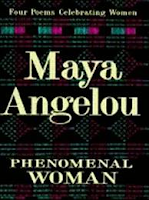 If you read the work of a contemporary poet like Maya Angelou, who is universally acclaimed as one of the finest poets of our generation she tells a story in her poetry. It is full of beauty, sorrow, imagination, and hope. One of my favorites is her Phenomenal Woman you can find the link to the rest of the poem below as well as a youtube video of the reading.
http://www.youtube.com/watch?v=pNj9cpvj-pU Maya Angelou, Phenomenal Woman
Pretty women wonder where my secret lies.
I'm not cute or built to suit a fashion model's size
But when I start to tell them,
They think I'm telling lies.
I say,
It's in the reach of my arms
The span of my hips,
The stride of my step,
The curl of my lips.
I'm a woman
Phenomenally.
Phenomenal woman,
That's me……
If you read the work of a contemporary poet like Maya Angelou, who is universally acclaimed as one of the finest poets of our generation she tells a story in her poetry. It is full of beauty, sorrow, imagination, and hope. One of my favorites is her Phenomenal Woman you can find the link to the rest of the poem below as well as a youtube video of the reading.
http://www.youtube.com/watch?v=pNj9cpvj-pU Maya Angelou, Phenomenal Woman
Pretty women wonder where my secret lies.
I'm not cute or built to suit a fashion model's size
But when I start to tell them,
They think I'm telling lies.
I say,
It's in the reach of my arms
The span of my hips,
The stride of my step,
The curl of my lips.
I'm a woman
Phenomenally.
Phenomenal woman,
That's me……
 You can also find that same lyrical, storytelling style in the poetry of any of the classic poets. For example look at Edgar Allan Poe’s, A Dream Within A Dream, below is the link to the whole poem and a short example of the poem itself.
http://www.youtube.com/watch?v=rxg7OFFtWQE&feature=related Edgar Allan Poe, A Dream Within A Dream.
http://www.poemhunter.com/poem/a-dream-within-a-dream/
A Dream Within A Dream
Take this kiss upon the brow!
And, in parting from you now,
Thus much let me avow-
You are not wrong, who deem
That my days have been a dream;
Yet if hope has flown away
In a night, or in a day,
In a vision, or in none,
Is it therefore the less gone?
All that we see or seem
Is but a dream within a dream.
You can also find that same lyrical, storytelling style in the poetry of any of the classic poets. For example look at Edgar Allan Poe’s, A Dream Within A Dream, below is the link to the whole poem and a short example of the poem itself.
http://www.youtube.com/watch?v=rxg7OFFtWQE&feature=related Edgar Allan Poe, A Dream Within A Dream.
http://www.poemhunter.com/poem/a-dream-within-a-dream/
A Dream Within A Dream
Take this kiss upon the brow!
And, in parting from you now,
Thus much let me avow-
You are not wrong, who deem
That my days have been a dream;
Yet if hope has flown away
In a night, or in a day,
In a vision, or in none,
Is it therefore the less gone?
All that we see or seem
Is but a dream within a dream.
 Some classic poetry rhymes, all of it is lyrical. Most children’s poetry rhymes because children remember rhymes more easily making it simpler for them to learn. They enjoy the rhyming and it helps spark their imaginations.
Many articles have been written on how rhyming helps children learn and why the classics are a great way to both entertain and teach children. You can read it in many articles, one of them is classic poems for kids. http://www.squidoo.com/classic-poems-for-kids It shows the simplicity that inspires children’s poetry.
This simplicity is shown so well in,
William Makepeace Thackeray’s
At The Zoo.
First I saw the white bear, then I saw the black;
Then I saw the camel with a hump upon his back;
Then I saw the grey wolf, with mutton in his maw;
Then I saw the wombat waddle in the straw;
Then I saw the elephant a-waving of his trunk;
Then I saw the monkeys-mercy, how unpleasantly they-smelt!
Some classic poetry rhymes, all of it is lyrical. Most children’s poetry rhymes because children remember rhymes more easily making it simpler for them to learn. They enjoy the rhyming and it helps spark their imaginations.
Many articles have been written on how rhyming helps children learn and why the classics are a great way to both entertain and teach children. You can read it in many articles, one of them is classic poems for kids. http://www.squidoo.com/classic-poems-for-kids It shows the simplicity that inspires children’s poetry.
This simplicity is shown so well in,
William Makepeace Thackeray’s
At The Zoo.
First I saw the white bear, then I saw the black;
Then I saw the camel with a hump upon his back;
Then I saw the grey wolf, with mutton in his maw;
Then I saw the wombat waddle in the straw;
Then I saw the elephant a-waving of his trunk;
Then I saw the monkeys-mercy, how unpleasantly they-smelt!
 Or in Robert Louis Stevenson’s poems The Cow and The Land of Counterpane, which describes so intensely just how a child’s imagination works.
http://www.youtube.com/watch?v=MouuBLfHBBc Robert Louis Stevenson, The Land of Counterpane
http://www.youtube.com/watch?v=p0K-umvbKgY The Cow by Robert Louis Stevenson
The Cow
The friendly cow all red and white,
I love with all my heart:
She gives me cream with all her might,
To eat with apple-tart….
The Land of Counterpane
When I was sick and lay a-bed,
I had two pillows at my head,
And all my toys beside me lay
To keep me happy all the day.
And sometimes for an hour or so
I watched my leaden soldiers go,
With different uniforms and drills,
Among the bedclothes, through the hills….
Or in Robert Louis Stevenson’s poems The Cow and The Land of Counterpane, which describes so intensely just how a child’s imagination works.
http://www.youtube.com/watch?v=MouuBLfHBBc Robert Louis Stevenson, The Land of Counterpane
http://www.youtube.com/watch?v=p0K-umvbKgY The Cow by Robert Louis Stevenson
The Cow
The friendly cow all red and white,
I love with all my heart:
She gives me cream with all her might,
To eat with apple-tart….
The Land of Counterpane
When I was sick and lay a-bed,
I had two pillows at my head,
And all my toys beside me lay
To keep me happy all the day.
And sometimes for an hour or so
I watched my leaden soldiers go,
With different uniforms and drills,
Among the bedclothes, through the hills….
 In Wee Three: A Child’s World, you find a similar rhyming quality that helps a child stretch their imagination and will speak to them in the language of youth. This language is full of imaginative, innocent, and literal ways children look at the world. There are many children’s poets but the ones that seem to stand the test of time all write as though they were looking at the world through the eyes of a child.
 In my book A Poet’s Journey: Emotions, my style is more like the poets of the past and present who tell a story in their verse and less abstract. It tells of the emotional roller-coaster that life can be.
If you read either children’s or adults poetry I believe you will agree the main difference between poetry written for a child and that for an adult is in the sophistication of the poem and the type of story it tells. At least this is true of most of the classic poets.
In my book A Poet’s Journey: Emotions, my style is more like the poets of the past and present who tell a story in their verse and less abstract. It tells of the emotional roller-coaster that life can be.
If you read either children’s or adults poetry I believe you will agree the main difference between poetry written for a child and that for an adult is in the sophistication of the poem and the type of story it tells. At least this is true of most of the classic poets.

 These beloved verses and the illustrations of E.H. Shepard were to see me through my childhood filling my mind and fertilizing my imagination as they did for so many children. Yet where did that love of poetry go for so many people?
I think it is in the way poetry is taught in today’s world. For instance, on my first day of Honors English class in college as the professor was giving us the curriculum for the semester. She listed what we would cover in the order in which we would cover it. The very last on the list was poetry, with a shrug she said “I’m not really comfortable with poetry, so am leaving it for last. I hope there isn’t time.” I heard much the same, when I joined the editorial board of the college Journal of the Arts. The poetry picked for the journal by and large was full of abstract thought. It was as if the general consensus about poetry is if it’s abstract and difficult to figure out the meaning behind the words than it must be good. No wonder so many say they don’t understand poetry or don’t like poetry, when English professors admit they don’t understand it.
It is a shame that poetry has such a bad rap, (no pun intended) as poetry weaves through our entire lives, even if we don’t know it. You hear it in the lyrics of the music. It is in our greeting cards on coffee mugs, in commercials, you name it and you will find poetry. Yet many parents shy away from either reading it to their children or picking it up and reading it to themselves.
What is the meaning of poetry to me you might ask? Poetry and verse are short stories telling the tale lying in the heart and mind of the author.
These beloved verses and the illustrations of E.H. Shepard were to see me through my childhood filling my mind and fertilizing my imagination as they did for so many children. Yet where did that love of poetry go for so many people?
I think it is in the way poetry is taught in today’s world. For instance, on my first day of Honors English class in college as the professor was giving us the curriculum for the semester. She listed what we would cover in the order in which we would cover it. The very last on the list was poetry, with a shrug she said “I’m not really comfortable with poetry, so am leaving it for last. I hope there isn’t time.” I heard much the same, when I joined the editorial board of the college Journal of the Arts. The poetry picked for the journal by and large was full of abstract thought. It was as if the general consensus about poetry is if it’s abstract and difficult to figure out the meaning behind the words than it must be good. No wonder so many say they don’t understand poetry or don’t like poetry, when English professors admit they don’t understand it.
It is a shame that poetry has such a bad rap, (no pun intended) as poetry weaves through our entire lives, even if we don’t know it. You hear it in the lyrics of the music. It is in our greeting cards on coffee mugs, in commercials, you name it and you will find poetry. Yet many parents shy away from either reading it to their children or picking it up and reading it to themselves.
What is the meaning of poetry to me you might ask? Poetry and verse are short stories telling the tale lying in the heart and mind of the author.


Tuesday, December 25, 2012
My heart and soul are full today; the holiday season has brought peace and joy to me. Spending time with family on Christmas Eve and then spending Christmas with my husband, watching the Kittens play with their toys.
Our three horses were so overjoyed with the extra treats in their breakfast bucket and the extra time we spent with them. It was a quiet day, Ken and I watched a few movies some old John Wayne and some new brought a much needed respite for both of us.
I hope all of you had a joyous Holiday season, however you celebrate it and wish for all a happy, prosperous and healthy New Year. Blessings
Spirits danced high on waves of colored lights
Joyful song, laughter and well wishes fill the air
Kittens snuggled up near the woodstove today
Warming their backsides on this cold winter day
Bless all the children and the furbabies too.

Thursday, December 13, 2012
The Caretaker

Sunday, November 11, 2012
The Between Times
Sometimes in life a series of images, thoughts, or ideas
run through your mind. As a writer, I find I must write them, or they will
haunt me.
I wrote The Between Times after being inundated with so
much negativity in our current political climate. Many of the decisions that
have been made by the Supreme Court and the Congress, as well as statements
made by political figures, inspired this view of a possible future. It is a
path that we might find ourselves walking, if we continue along the paths that
some of these remarks and decisions are pointing us in.

Though that world is a dark place for many, it also
contains a bit of magic in the form of a young woman named Jewell. I always
believe that life can be made better if not by actual magic and miracles than
by the power of the people if they join their energy to create a better world.
Wednesday, August 1, 2012
NEWS FLASH
I am so excited to share this news with you all. The new expanded Wee Three: A Child's World will be available for sale in paperback. It will be available at Amazon.com, Barnes&Noble.com, martamoranbishop.com and many other retailers. It will also be available in kindle at the low price of $1.99. I however must recommend the paperback as kindle doesn’t do justice to the wonderful illustrations by Hazel Mitchell.
I just approved the proof!!!!! Now only a few days out.
I want to thank Beth Hoffman, Dellani Oakes, and Amanda Thrasher for their continual support of Wee Three. It has and does mean so much to me.
A special thank you to all of you who loved Wee Three: A Mother's Love in Verse, this expanded edition, has gone from a mere 60 pages to 92 pages. It contains many more poems depicting the joy, and innocent pleasures of childhood.
Saturday, July 28, 2012
WHITE FANG BY JACK LONDON
I am currently about ten thousand words into my novel,
which has a current working title of Sadie Fights Back.” I have absolutely
no idea if it is even close to what the story will eventually be called. It is
a fictional story based upon events that can and do take place in the life of a
nurse mare.
As a part, of my research into writing a story from the
perspective of an animal. I read a series of books written by some of the best.
Two of them were written by Jack London. They were Call of the Wild and White
Fang. I enjoyed both books, and they both gave me an insight into not only writing
from the perspective of an animal, but what might happen in the mind and life
of a wolf or wild dog.
It also tells how the cruelty of man can affect the life
of animals. Not only do they have to face the challenges of nature, and other
predators. They also in many cases face the indifference of men, who consider
them expendable and sometimes use them in brutal ways. Making them insane beasts,
that in many cases destroys their sanity.
White Fang was one such animal. Part wolf, part dog, he
was first raised as a wolf, then he begins his life in the world of man to be
used and abused by both animal and human.
In part of his story I wept, cringed, and feared for his
life, as a man called Beauty turned him into a fighting dog. Treating him with
the utmost cruelty until his life was nothing, but kill or be killed. He was turned
into a wild beast that would frighten anyone. It reminded me that in this day and
age, we still have similar people and similar events, dogs are still used as entertainment
for evil men whose only interest is watching blood sport.
Will, White Fang find anyone, be it man or beast that he
can love and will love him? That is the question that only someone who reads
this excellent book can learn.
It was originally written as a book for younger boys,
yet in today’s world it would be considered to brutal and to mature a book by many.
It is a book that I believe everyone should read who wants to learn about
books, animals, and the cruelty that our actions can cause.

Subscribe to:
Posts (Atom)